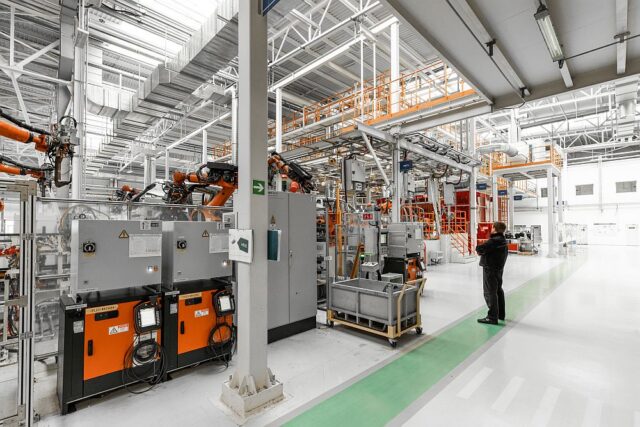
In the grand theatre of global manufacturing, Production placement emerges not merely as a logistical decision but as a profound orchestration of human ambition, technological prowess, and economic destiny. Like cellular division, where each organelle finds its precise position to ensure the organism’s survival, modern industrial placement requires a symphonic understanding of countless variables harmonising to create something greater than their sum.
I have observed the elegant machinery of life, watching proteins fold into destined configurations, enzymes finding target substrates with molecular precision. This biological accuracy, this inherent placement wisdom, mirrors Singapore’s manufacturing approach, where strategic positioning becomes an art form refined by decades of industrial evolution.
The Molecular Precision of Singapore’s Manufacturing Ecosystem
Singapore’s manufacturing landscape resembles a living organism, a complex ecosystem where each component has been placed with surgical precision to serve the greater whole. Like specialised cells within tissue, Singapore’s production facilities exist in orchestrated clusters, each serving distinct yet interconnected functions.
The nation’s manufacturing sector contributes 20-25% to Singapore’s annual GDP, employing 12% of the workforce with median wages 10% higher than the overall economy. These figures represent strategic placement decisions extending beyond economics, a philosophy recognising the profound interconnectedness of all system elements.
“Singapore makes four out of the world’s top ten drugs and is the 7th largest exporter of petrochemicals”, whilst housing “over 2,700 precision engineering firms supply critical products and expertise needed to manufacture complex components and equipment used in industries such as semiconductors, medical technology, marine, offshore and aerospace”. This constellation of capabilities emerges not by accident, but through the deliberate placement of complementary industries that strengthen and support one another.
The Choreography of Strategic Manufacturing Placement
Global corporations’ positioning within Singapore demonstrates the intricate calculus of modern production placement. BioNTech’s decision to establish its Asia-Pacific headquarters and mRNA facility here exemplifies this strategic thinking, recognising Singapore would provide access to “a dynamic marketplace with a population of 655 million” whilst building “rapid-response production capability to address future pandemic threats”.
This represents more than geographical convenience; it embodies the understanding that proximity breeds possibility. Just as neurons require specific brain positioning to form networks, manufacturing facilities need strategic placement to create innovation ecosystems driving competitive advantage.
The evidence of Singapore’s magnetic appeal for production placement lies in its remarkable pharmaceutical achievements:
• Eight of the world’s 10 largest pharmaceutical firms operate manufacturing plants in Singapore
• 60% of the world’s microarrays are manufactured within the nation’s borders
• One-third of the world’s mass spectrometers emerge from Singapore’s precision facilities
• No major regulatory observations from the US FDA in 30 years, a testament to manufacturing excellence
Industry 4.0: The Evolution of Cellular Manufacturing
Singapore’s manufacturing transformation mirrors cellular differentiation, where stem cells evolve into specialised tissues. Through Industry 4.0 initiatives, production facilities undergo metamorphosis, evolving into “fully automated smart factories” using “machine vision algorithms to conduct automatic quality control”.
This evolution demonstrates how human ingenuity replicates sophisticated biological feedback mechanisms. Just as homeostasis maintains optimal conditions in organisms, Singapore’s smart factories employ AI and analytics to maintain optimal production, creating “intelligent production”.
The Singapore Manufacturing 2030 vision, expanding the sector by 50% by 2030, represents more than growth; it recognises that strategic advanced manufacturing placement can reshape economies. This acknowledges “manufacturing is moving toward becoming more technologically advanced while becoming less labour-intensive”, perfectly suited for space and workforce optimisation.
The Symbiotic Relationships of Production Ecosystems
Singapore’s production positioning creates symbiotic relationships between manufacturing sectors. The precision engineering industry, with “more than 2,700 precision engineering firms”, doesn’t exist in isolation; it serves as connective tissue, enabling other industries to thrive.
This interconnectedness mirrors cellular organelles, mitochondria providing energy, ribosomes synthesising proteins, and endoplasmic reticulum processing materials. Singapore’s manufacturing clusters create value through interdependence, with precision engineering supporting semiconductor production, enabling medical technology advancement.
“Singapore’s semiconductor industry accounts for 20% of the world’s global semiconductor equipment output”, whilst simultaneously supporting biomedical manufacturing, producing “four out of the world’s top ten drugs”. This symbiosis creates resilience and a competitive advantage impossible through isolated facilities.
The Human Element in Manufacturing Orchestration
Behind every production placement decision lies fundamentally human stories, teams navigating complexity with biological system intelligence. Singapore recognises this through initiatives like the “M2030 careers initiative to develop attractive career options” and the “Industry 4.0 Human Capital Initiative”.
These programmes acknowledge that successful manufacturing placement requires more than optimal geography; it demands skilled professionals operating at the intersection of human creativity and technological capability.
The Future Landscape of Strategic Production Positioning
Manufacturing placement increasingly resembles biological adaptation principles. Like species evolving to occupy ecological niches, manufacturing operations must continuously adapt their positioning to exploit opportunities whilst avoiding competitive pressures.
Singapore’s embrace of additive manufacturing illustrates this adaptive principle. By positioning itself at the forefront of technologies that “reduce waste products and overall production costs since only the 3D data package of the product is required”, Singapore demonstrates how forward-thinking positioning creates sustainable advantages.
The integration of AI, robotics, and IoT represents more than technological advancement; it embodies a continuous adaptation philosophy ensuring long-term viability in rapidly evolving global markets.
Singapore’s manufacturing transformation teaches us that production placement, at its finest, transcends industrial strategy to become applied wisdom, recognising that success emerges from understanding deep patterns governing complex systems. In this delicate architecture of industrial destiny, every placement decision reverberates through the entire ecosystem, creating possibilities extending far beyond single facilities, much like the profound impact of strategic Production placement continues shaping global manufacturing excellence.